Dress shoes
Oxford, derby, and the wholecut
· Updated
Closed lacing, open lacing, and a shoe cut from one piece of leather. What separates the three, and which belongs under a suit.
Three ways to close a dress shoe
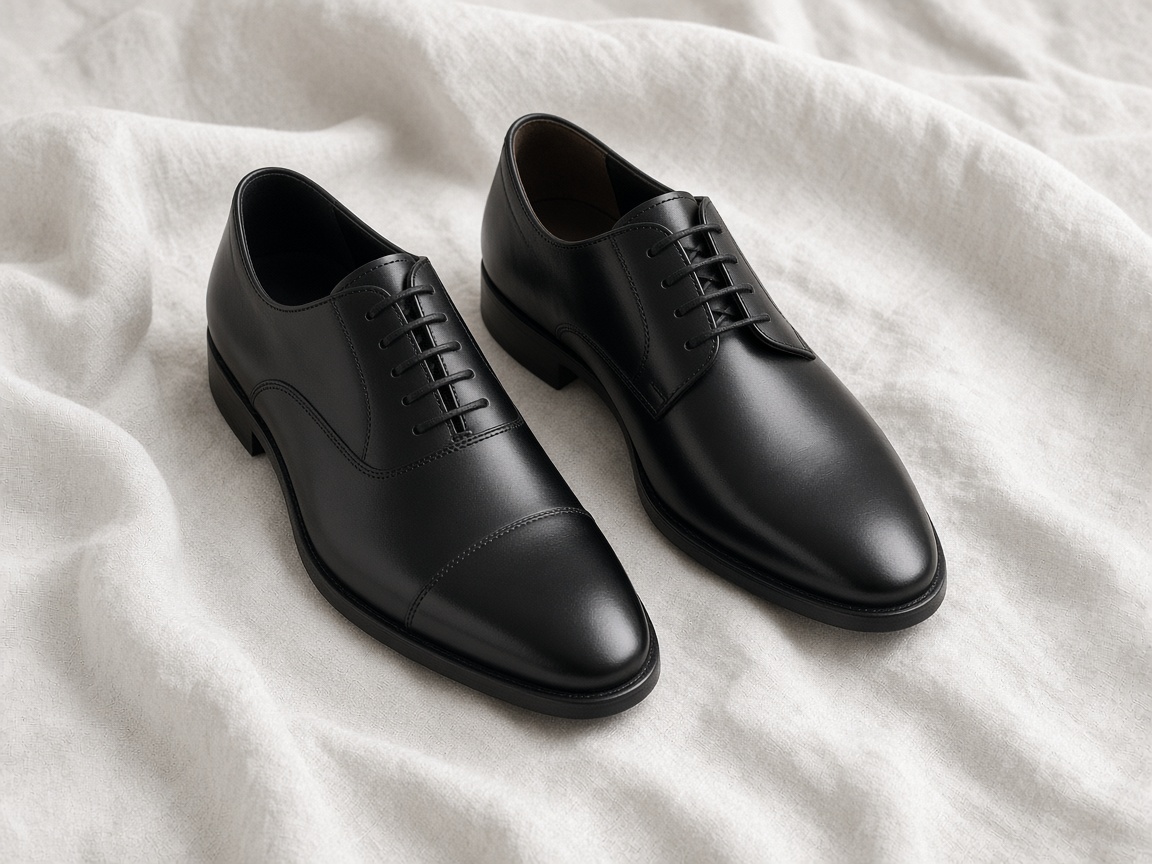
Most classical dress shoes are oxfords, derbies, or wholecuts. What separates them is neither the toe shape nor the country. It is how the upper is cut and how the lacing meets at the throat. Learn that first; choose the last second.
Closed lacing looks stricter. Open lacing looks a step less exact and is kinder to a high instep. A wholecut removes most of the seams, so the leather itself becomes the pattern. All three can be black calf suit shoes. Think of them less as three levels of dressiness than as three patterns for different feet and different days.
| Oxford | Derby | Wholecut | |
|---|---|---|---|
| Lacing | Closed: facings stitched beneath the vamp | Open: facings stitched on top of the vamp | Usually closed, like an oxford |
| Cut | Plain or cap toe, with a seam across the vamp if capped | Same patterns as the oxford, with the throat free to spread | Vamp and quarters from a single piece of leather, no toe seam |
| Fit | Smaller opening; can be tight on a high instep | Easier fit; kinder to a high instep | Follows the lacing: tight on a high instep when closed |
| How formal | The strictest of the three | A step less exact; a plain black derby is still a business shoe | Formal, and shows every mark on the leather |
| Wear it with | A worsted suit | A jacket and odd trousers: flannel, twill, a sport coat | A suit, in black or dark brown |
Closed lacing
An oxford closes its lacing. The eyelet facings are stitched beneath the vamp, so the quarters meet in a clean line down the throat. The opening is smaller, which is why the shoe looks stricter, and why a high instep can find it tight.
A plain black calf oxford, unpunched, on a modest sole, is the suit shoe. Edward Green makes it on a slimmer toe. Crockett & Jones makes it on the rounder Northampton last. Cheaney makes the same closed lacing for a day at a desk.
A cap-toe oxford adds a horizontal seam across the vamp; the shoe is still closed-laced and still formal. Leave heavy punching and thick soles for other days. The plain or lightly capped oxford is the one that belongs under worsted.
If the facings gape when laced, the last is too narrow for your foot or the size too small. If they overlap heavily, the shoe may be too wide. A well-chosen oxford shows a neat V of tongue and facing, without force.
Open lacing
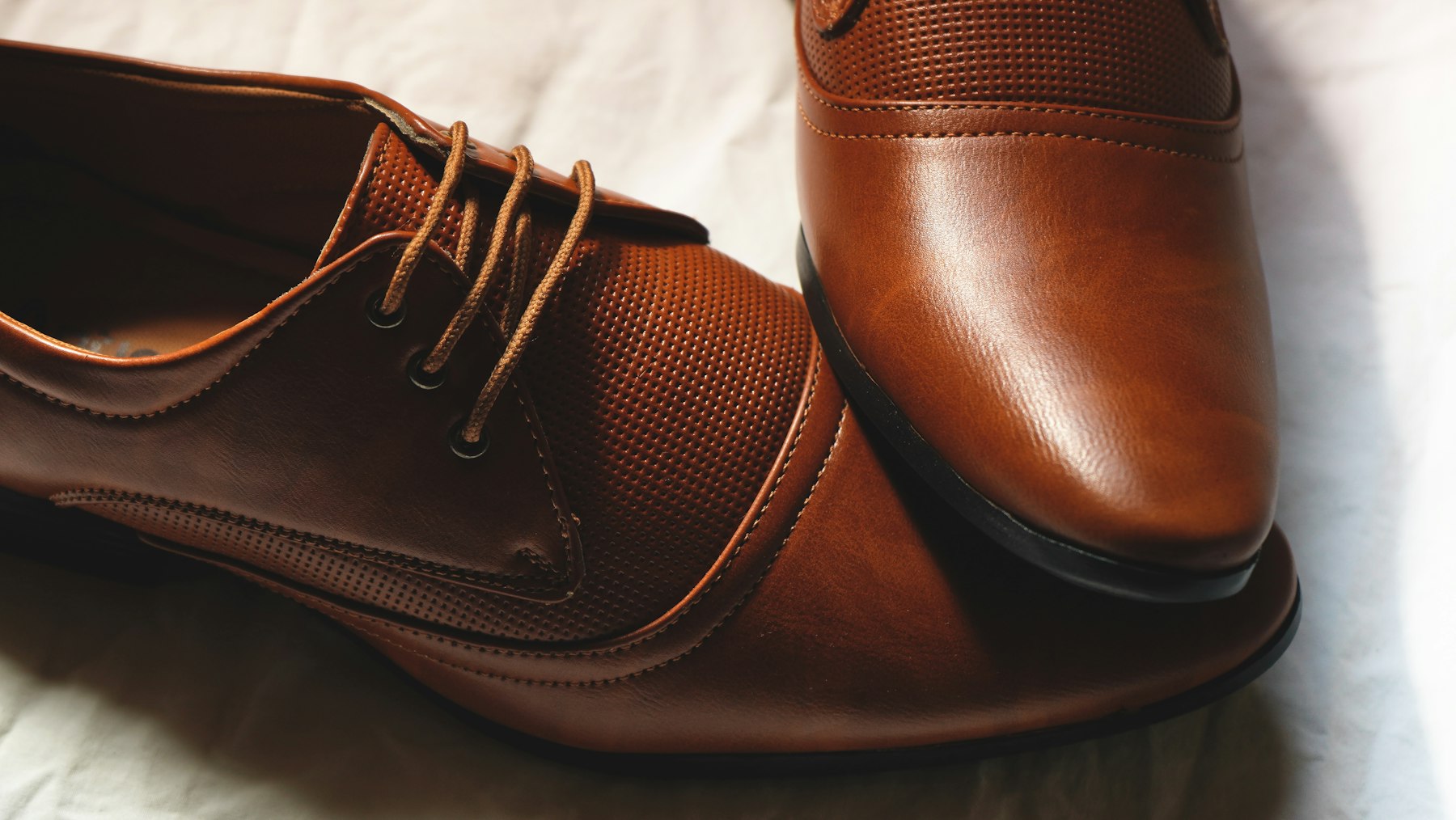
A derby leaves its lacing open. The facings are stitched on top of the vamp, so the throat can spread. It is the easier fit, the shoe for a high instep, and the shoe for less severe cloth: flannel, cavalry twill, a sport coat, odd trousers.
Open lacing is not automatically casual. A black derby in smooth calf with a plain toe is still a business shoe, one step less exact than the oxford. American shops often call the same pattern a blucher.
If an oxford bites across the instep, try the same last as a derby before you change makers. Many English factories cut both on one last. The difference is the pattern, not the wooden form.
Country derbies tend to carry thicker soles and more punching; town derbies stay plain. The brogue guide sorts the punching. Keep the two apart in your wardrobe, so a heavy country pair does not drift under fine worsted out of habit.
One piece of leather
A wholecut takes the vamp and the quarters from a single piece of leather. There is no seam across the toe and none up the facing. The hide has to be clean, because a scar has nowhere to hide. What you see is the leather and nothing else.
The shape is formal. It belongs with a suit, in black or dark brown, and it shows off the way light moves across an unbroken surface. Stefano Bemer and Santoni both make one, as do English makers. The construction is the point, not the country.
Because the surface is plain, polish and colour matter more. A scratched black wholecut looks unfinished sooner than a scratched brogue. Pack a soft cloth when you travel, and accept that the shoe will show every day of its wear.
Most ready-to-wear wholecuts still lace closed, like an oxford. The missing seams do not change the fit rules: a high instep can still find the throat tight. Try one as carefully as you would any closed-laced oxford.
With a suit
Match the lacing to the cloth. Closed lacing, dark calf, and a modest sole go with a worsted suit. Open lacing goes with a jacket and trousers that do not match. The wholecut is for the suit, on a day when the shoe itself is meant to be seen.
Socks finish the line. A short sock under a suit trouser breaks it. A dark sock that matches the shoe or the trouser keeps the eye on the cloth, not the ankle.
Belt and shoe should agree in colour family; a black oxford with a brown belt splits the outfit in two. Keep the metal quiet. A simple buckle is enough under classical cloth.
If you are starting with one pair, make it a dark oxford. The English makers, the Italian makers, and the Spanish makers in this index all cut it. The derby and the wholecut follow once that first last is settled. How the sole is attached matters as much as the lacing: see the Goodyear welt guide and England, Italy, and Spain. For a ceremony, read the wedding guide, and for a slip-on, the loafer guide.