
Ceremony
Wedding attire, guest and groom
· Updated
Guest or groom, the rules are older than the venue. How to read the card, choose the cloth, and keep the shoes quiet.
Two roles, one grammar
A wedding is the rare occasion when being correct matters more than being interesting. The guest has to look finished without competing with the couple. The groom, the man of the day, has to look deliberate without looking like he is in costume. Both draw on the same classical grammar: dark cloth, a white shirt, a quiet tie, and a black or near-black shoe.
What follows is the safe path, and it is safe on purpose. No novelty colour, no experimental silhouette. If the invitation is vague, the answer is almost always a dark lounge suit. If it names morning dress or black tie, those codes have settled rules, and the smart move is to follow them rather than reinterpret them.
The houses in this index divide the work. Italians cut the suit and the shirt; English, Italian, and Spanish makers cut the shoe. Settle the register of the day first—day or evening, formal or lounge—and only then choose the house. A beautiful jacket in the wrong register is still the wrong jacket.
Read the card
The invitation is the first garment you put on. “Black tie” means a dinner jacket after six, not a dark suit with a black necktie. “Morning dress” means a morning coat, striped or grey trousers, and a waistcoat, for a daytime ceremony that has asked for it. “Lounge suit,” “cocktail,” or no dress code at all usually means a dark suit in navy, charcoal, or mid-grey.
The clock matters as much as the wording. A noon ceremony in a garden rarely wants a dinner jacket; an evening reception in a city room can take black tie when the card asks for it. When the card says nothing, lean toward the darker lounge suit and away from anything that reads as evening wear, or as a country weekend.
If you are genuinely unsure, ask, once. A short note to the couple or an usher beats guessing your way into a white dinner jacket, a pale linen suit, or loud brogues. Classical dressing is not a secret code. It is matching the room you will be standing in.
The guest
A guest’s job is not to be remembered for his clothes. Navy or charcoal worsted, a white shirt, a tie that does not shout, and a black oxford will carry you through almost any lounge-suit wedding. Mid-grey is correct in daylight. If you know what the groom is wearing, do not match his cloth, and leave white dinner jackets and ivory suits alone unless the card asks for them.
A soft Italian jacket from a house such as Caruso or Canali gives most ceremonies all the structure they need. The guide to Italian suit brands groups the houses by style. Keep the cloth plain. A quiet herringbone works in the cooler months; a bold check or a pale linen two-piece is a poor guest choice unless the couple have already set a casual tone.
If you wear a pocket square, make it white linen or a soft tone close to the shirt. Novelty prints and large florals can wait for another day. The tie should sit darker or quieter than the suit, never brighter. And a black necktie with a lounge suit is not black tie. It just looks unfinished.
Above all, do not outshine the groom: not with a higher shine, a sharper peak lapel, or a more formal shoe than the day requires. If he is in a dark lounge suit, yours should be of similar severity. If he is in morning dress, follow the card rather than inventing a third code of your own.
The man of the day
The groom sets the ceiling of formality for every man around him. Morning dress belongs to a formal daytime ceremony that asks for it; black tie, to an evening that does. When the wedding is neither, the modern classical default is a dark lounge suit in navy or charcoal, often in cloth a shade finer than the guests’.
Houses such as Brioni and Cesare Attolini cut suits that can carry the day without tipping into costume. Peak lapels and a waistcoat are there when the register is high; a clean notch lapel on a dark three-piece is enough when it is not. Whatever you choose, the fit has to be exact. A wedding photograph freezes every gap at the collar and every break at the shoe, and the album keeps them.
Ushers and groomsmen should agree in register, not necessarily in cloth. Same colour family, same formality, same shoe colour is usually enough. Matching rental costumes that none of you would wear again are another problem entirely; classical practice prefers real suits that can go back to ordinary life.
Torn between looking special and looking correct? Choose correct. The day is already special. A quiet dark suit, a proper shirt, and a shoe you can actually walk in will photograph better than a novelty colour chosen once and regretted in every album.
Cloth, shirt, and tie
Dark solid worsted is the safe wedding cloth. It hangs cleanly, holds a crease, and does not fight the camera. A midweight cloth also crosses the seasons better than a fashionably light summer suit that is creased before the vows. Save open-weave linen and pale cotton for weddings that have already declared themselves informal.
The shirt should be white, or the quietest cream the light allows. A spread or semi-spread collar suits most Italian jackets; a point collar still belongs to a stricter English line. Finamore and Camiceria Piccirillo both cut shirts that sit under a jacket without bulk. French cuffs are correct with small, quiet metal cufflinks; barrel cuffs are fine when the day is less formal.
The tie finishes the sentence. Silk in navy, charcoal, burgundy, or a restrained grenadine covers the classical range for guest and groom alike. Skip slogans, novelty motifs, and anything that reads as a party favour. A bow tie belongs with black tie, not with a lounge suit pretending to be one.
Belt and shoes should agree: black calf with black or near-black leather. No bright buckle. No watch that looks like sporting kit. A wedding is not the place to debut a way of dressing you have never worn to dinner.
The shoe
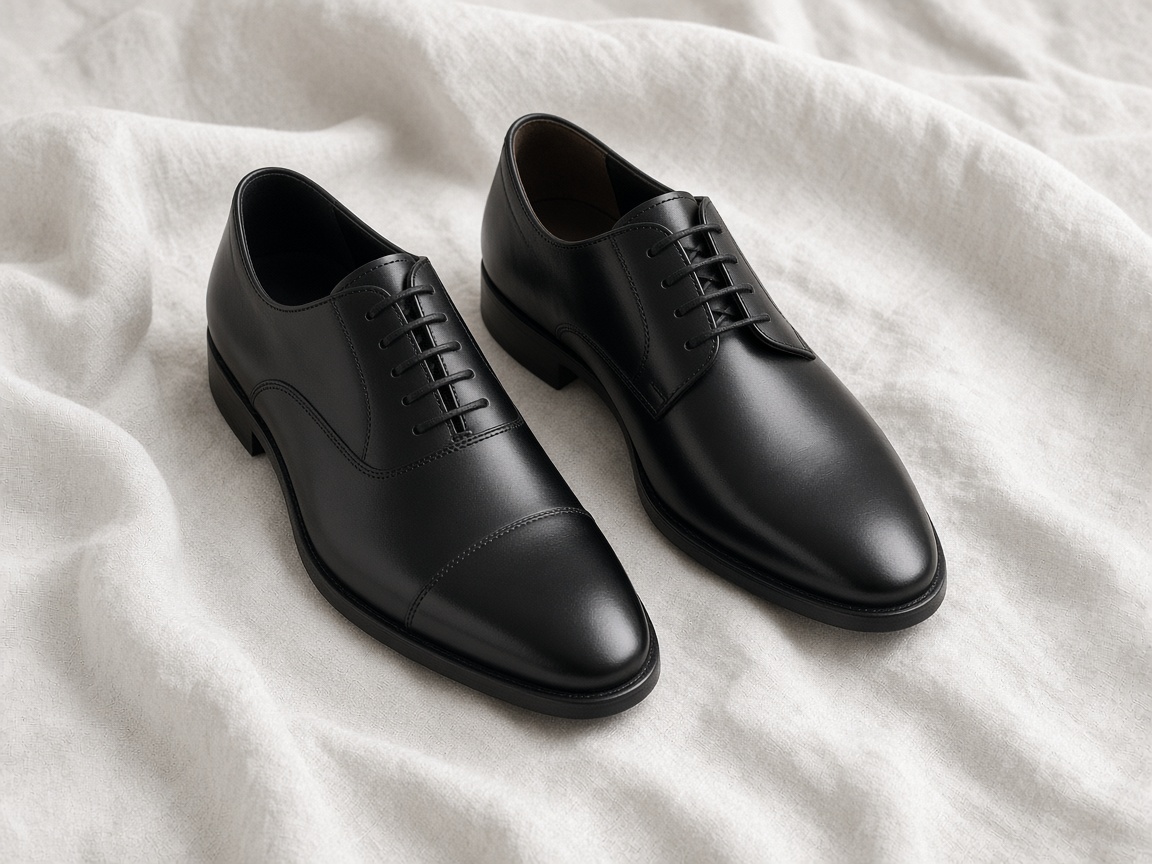
A plain black calf oxford is the wedding shoe for the lounge suit and for most daytime formality short of full morning dress: closed lacing, little or no punching, a modest sole. Edward Green and Crockett & Jones cut that shape on English lasts. Cheaney makes the same closed lacing for a long day on your feet. Stefano Bemer is the sharper Italian alternative, if you already know the last.
Dark brown can work at a countryside daytime wedding in navy or grey, but black remains the safer answer when the room is a church, a city hall, or an evening reception. Leave suede loafers, white trainers, and heavy full brogues for other Saturdays. A black semi-brogue is the loudest punching that still belongs under a dark suit.
Break the shoes in before the day. A wedding means hours of standing, walking, and often dancing, and pain at the little toe is a wrong last, not a badge of formality. Wear dark over-the-calf socks: they keep the line when you sit, where short socks under a suit trouser break it in every side-on photograph.
Before you order
If the invitation is unclear, wear a dark lounge suit, a white shirt, a quiet tie, and black oxfords. That combination almost never offends. It is wrong only when the card has named morning dress or black tie, and even then the fix is to follow the named code, not to invent a third.
If your wardrobe is thin, buy the shoes and the shirt first; a well-fitting dark suit is easier to borrow or hire than a last that already fits your foot. The Italian cloth and the English shoes in this index are the usual starting shelves. Browse the shoe edit once you know you want a plain black oxford rather than a weekend brogue.
Then try the whole kit together before the week of the wedding: jacket, trousers, shirt, tie, belt, socks, shoes. Classical dress fails in the gaps—collar stand, cuff length, trouser break—not in the catalogue photograph. Close those gaps once, then leave the outfit alone until the day.